NFPA 2001 · 12 · 17

Clean agent, CO₂ and dry chemical systems, inspected properly.

Isolate the releasing circuits, check the enclosure and the hazard, test detection, the pre-discharge alarm and the abort switch, then weigh every cylinder. The report shows it all, and the system restored.

The form

What your inspectors record.

Special hazard suppression system inspection

NFPA 2001 · NFPA 12 · NFPA 17
  • The system: agent, manufacturer and model, the protected area, and the releasing panel
  • The enclosure: the hazard unchanged since design, its integrity, nozzles, piping and warning signs
  • Detection, alarm and release: detectors, pre-discharge alarm and time delay, abort switch, manual release, HVAC and damper shutdown
  • Every agent container on its own row: its full charge, what it measures today, its last hydrostatic test, and its bracket, valve and actuator
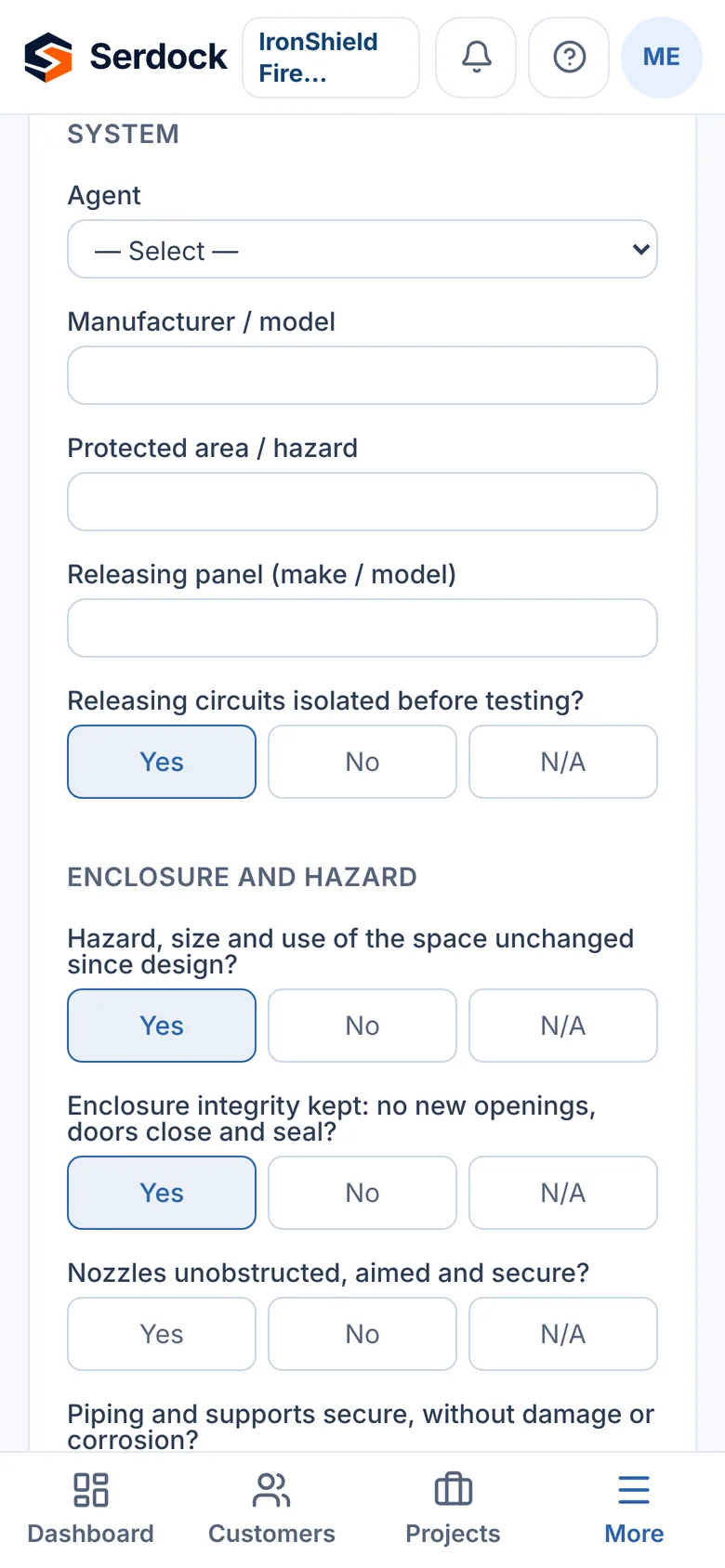
A special hazard system inspection on a phone: the agent, releasing panel, enclosure and hazard

On an inspector’s phone

Why it works in the field

Safety first, on the form

Releasing circuits isolated before testing, and reconnected with the panel normal at the end, are questions the inspector answers.

Every cylinder weighed

One row per container, with its full charge beside what it measures today.

Enclosure changes caught

A new opening or a changed use of the room is recorded where the customer and the next technician will see it.

Every inspection

And what every report in Serdock gets.

On a phone, on site

Forms built for one hand on a ladder: Yes / No / N/A answers, photos and voice notes, and nothing typed twice.

Deficiencies kept

Every "No" becomes a deficiency on the building and the device, with its severity, ready to quote.

Signed, sealed and sent

The inspector signs on screen, the report is sealed against changes, and the PDF reaches the customer the same day.

The next one scheduled

Submit an inspection and the building's next one is set from its interval, with reminders for your office and the customer.

Device tags with a QR code

Print tags for devices and buildings. A scan shows the inspection history and the next due date, on your own website.

In the customer's portal

Property managers see every report and open deficiency for their buildings, and approve repairs online.

Questions

Which special hazard systems does Serdock cover?
Clean agent systems under NFPA 2001, carbon dioxide systems under NFPA 12 and industrial dry chemical systems under NFPA 17, on one form that records the agent in use.

See it with your own work in mind.

A 30-minute walkthrough, on the inspections and jobs you actually do.