NFPA 17A · 96

Kitchen hood suppression inspections, done semiannually without the clipboard.

Ansul, Pyro-Chem, Range Guard, Kidde, Buckeye or Amerex: record the system, every appliance's coverage, the links you replaced and the release test, and leave the restaurant with the report already in the manager's inbox.

The form

What your inspectors record.

Kitchen hood suppression system inspection

NFPA 17A · NFPA 96
  • The system: make and UL listing, agent cylinders, nozzles, fuel shut-off and the cylinders' last hydrostatic test
  • The hazard: nozzle coverage of every appliance, plenum and duct; blow-off caps; grease build-up and filters
  • Detection and release: fusible links replaced with their temperature ratings and date, the detection line released, the remote pull station operated
  • What the release does: fuel shut off, electric appliances off, the building alarm signalled, and the exhaust fan
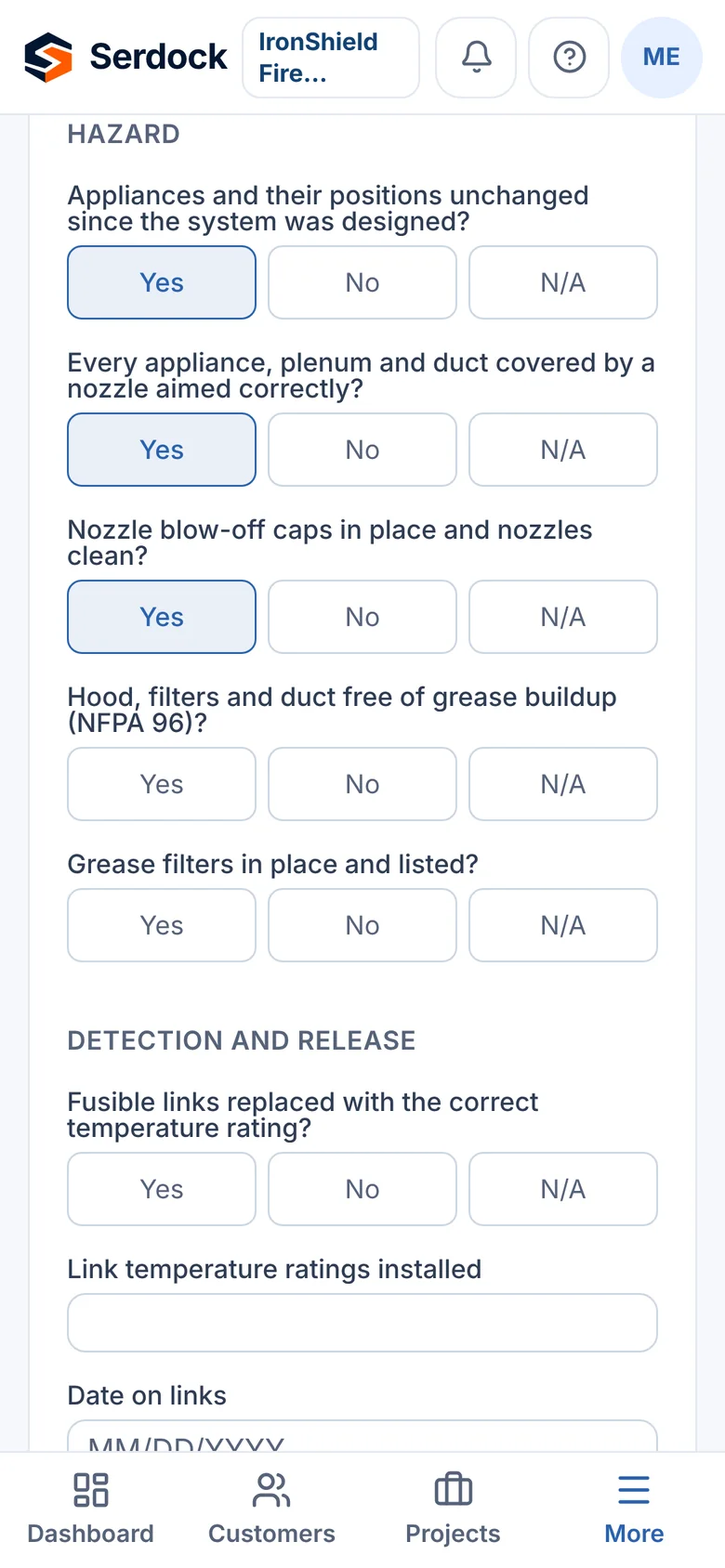
A kitchen hood suppression inspection on a phone: nozzle coverage, blow-off caps and grease

On an inspector’s phone

Why it works in the field

Twice a year, scheduled

Each hood system carries a semiannual interval, so the next visit is set when this one is submitted.

Grease reported, not ignored

Grease build-up in the hood and duct is recorded as a deficiency the customer sees, with a photo.

A record of every link

The temperature ratings and the date on the links you installed are on the report for the next technician and the fire marshal.

Every inspection

And what every report in Serdock gets.

On a phone, on site

Forms built for one hand on a ladder: Yes / No / N/A answers, photos and voice notes, and nothing typed twice.

Deficiencies kept

Every "No" becomes a deficiency on the building and the device, with its severity, ready to quote.

Signed, sealed and sent

The inspector signs on screen, the report is sealed against changes, and the PDF reaches the customer the same day.

The next one scheduled

Submit an inspection and the building's next one is set from its interval, with reminders for your office and the customer.

Device tags with a QR code

Print tags for devices and buildings. A scan shows the inspection history and the next due date, on your own website.

In the customer's portal

Property managers see every report and open deficiency for their buildings, and approve repairs online.

Questions

Which hood suppression systems does the form work with?
Any pre-engineered wet chemical kitchen system: Ansul, Pyro-Chem, Range Guard, Kidde, Buckeye, Amerex and others. You record the make and UL listing on the report.
Does it cover NFPA 96 as well as NFPA 17A?
The form records the hood, filter and duct conditions NFPA 96 is concerned with alongside the NFPA 17A system service.

See it with your own work in mind.

A 30-minute walkthrough, on the inspections and jobs you actually do.